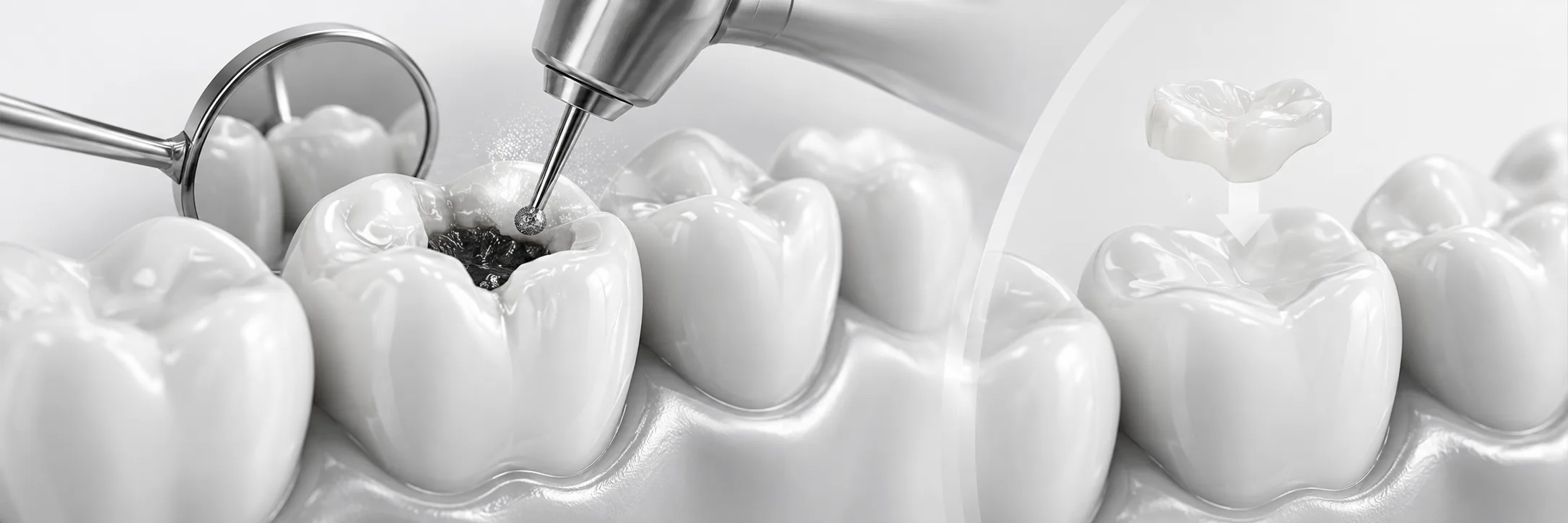
Cavity TreatmentCavity Treatment
We proceed with the necessary treatment according to the degree of cavity progression and the tooth's condition.
Cavity Treatment Procedure
Cavity treatment methods differ depending on the degree of progression and extent of damage.
After confirming the tooth status, we remove the decayed area and restore the tooth's shape and function using material and procedure suitable for the extent of damage.
Resin
After removing the cavity area, it is a treatment that directly restores with resin material similar to tooth color.
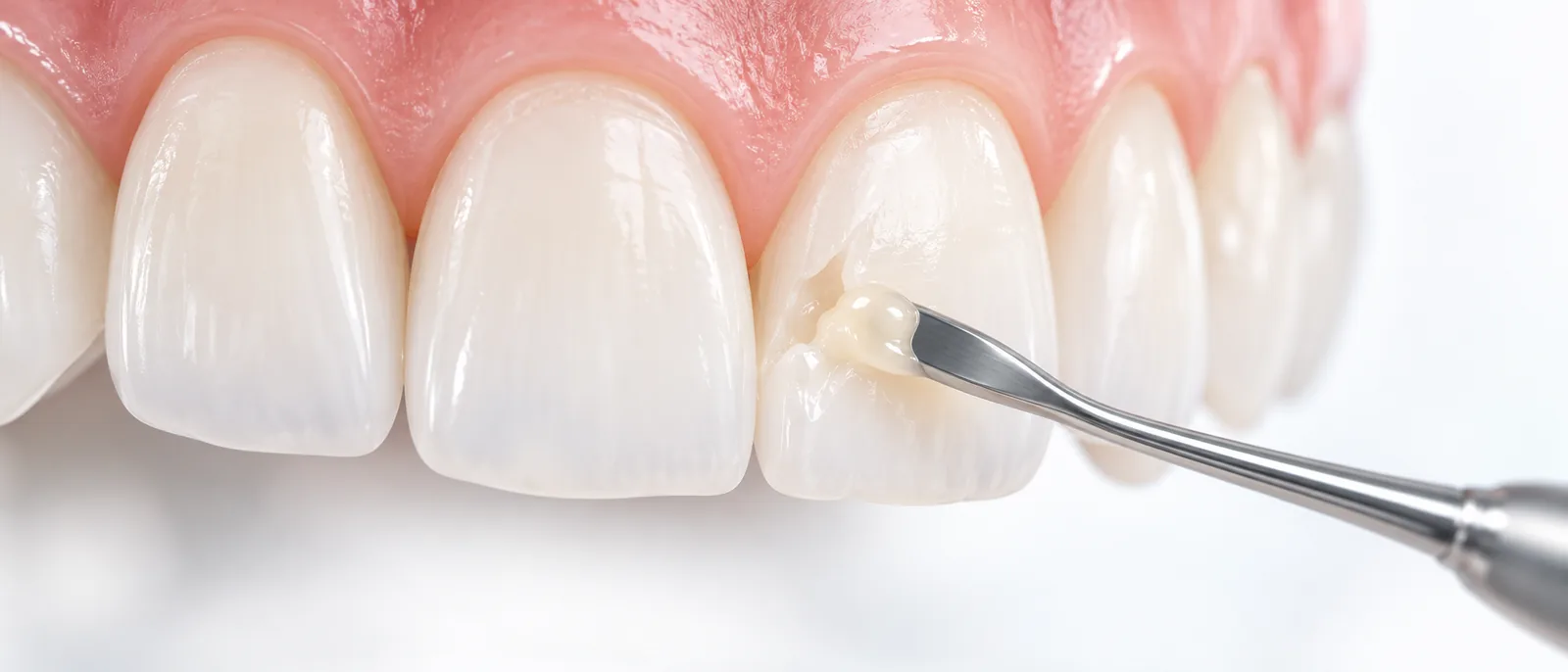
Cases to Consider
Small cavity.
Front teeth and other areas where aesthetics are important
Cervical AbrasionCharacteristics
Color similar to tooth color
Small amount of tooth removal.
A convenient method of Directly restoring
Relatively Low Cost
Inlay
When the decayed area is large and direct restoration is difficult, we remove the decay and then bond a fabricated prosthesis tailored to the tooth shape.
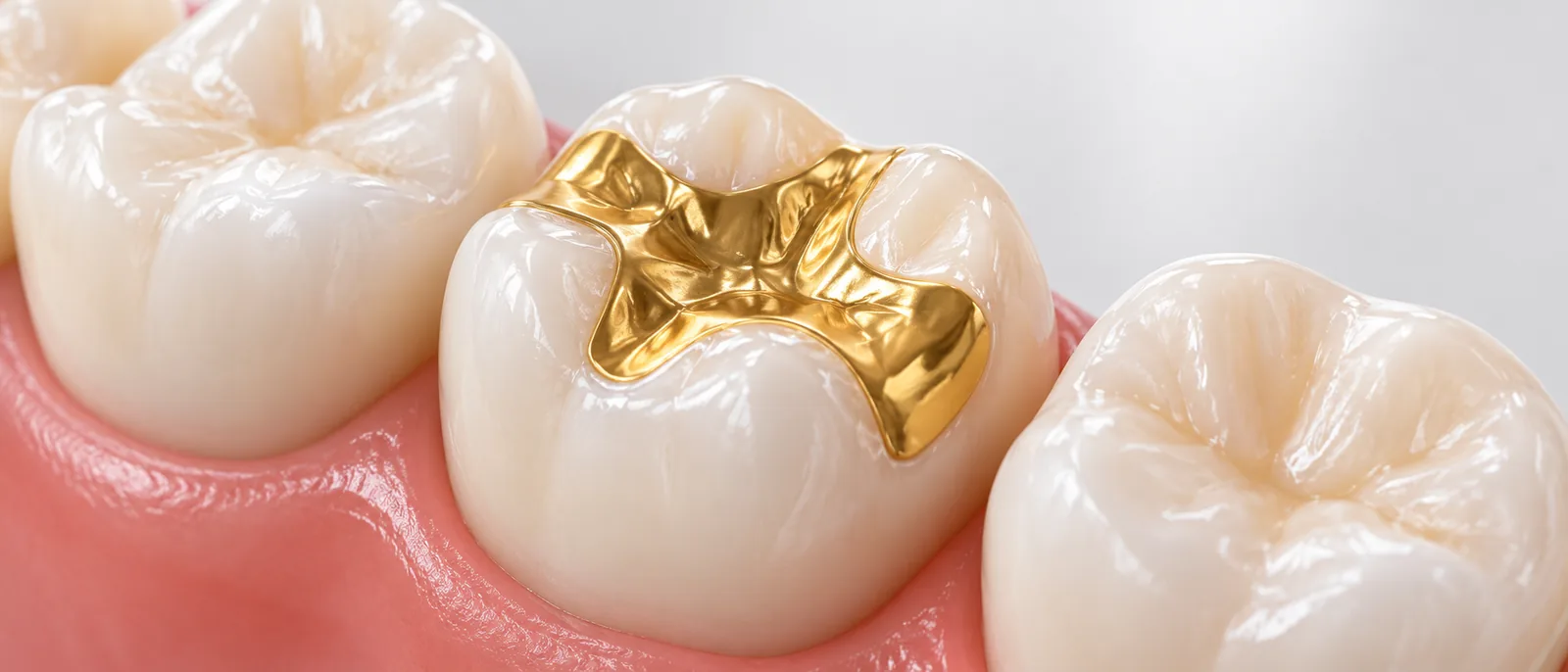
Cases to Consider
Cases where cavities are too extensive for Resin treatment
Cavities that have progressed even between the teethCharacteristics
Fabrication of prosthetics tailored to tooth shape
Precise Form Reproduction
Customized restoration according to the extent of cavities
Crown·Bridge
When a tooth is severely damaged by decay or fracture, it is restored with a Crown that covers the entire tooth, and when a tooth is lost, it can be replaced with a bridge that uses the teeth on both sides as supports.
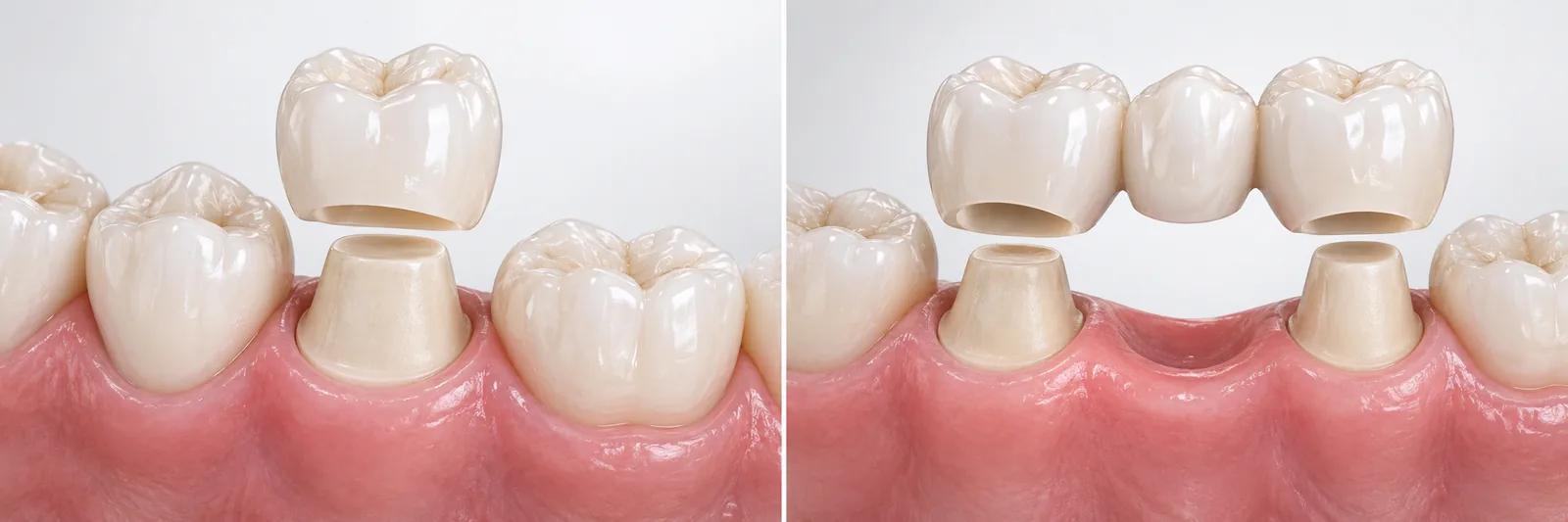
Cases to Consider
When a tooth is severely damaged by decay
Cases where tooth protection is needed after Root Canal Treatment
When a tooth is chipped or fractured
When missing teeth need to be replaced.Characteristics
Crown
A prosthetic that covers All of the tooth
Restoration and protection of the form and function of damaged teeth.Bridge
A connected prosthesis that replaces missing teeth.
Functional recovery using adjacent teeth as supports
Cavity Treatment Procedure Process
After checking the degree of cavity progression and tooth status, we determine the appropriate treatment method.
01 Oral Examination and X-ray Imaging
We confirm the cavity location, progression degree, and extent of tooth damage.
02 Anesthesia
When necessary, we perform local anesthesia to reduce discomfort during treatment.
03 Cavity Removal and Tooth Preparation
We remove the decayed portion, and if prosthetic treatment is needed, we shape the tooth to allow the prosthesis to be placed.
※ Root Canal Treatment may be required depending on the condition of the teeth.04 Tooth Impression
When Inlay or Crown is When Necessary, tooth impressions are taken for prosthesis fabrication.
05 Custom Prosthesis Fabrication and Attachment
We attach an inlay or Crown made to suit the tooth condition, and verify the tooth shape and occlusion.
Related Treatments
Frequently Asked Questions
The treatment depends on the extent of the cavity and how much of the tooth remains. If the cavity is small and enough tooth structure remains, it can be filled with resin; if the damage is extensive, an inlay or crown may be needed. We check the tooth through an examination and X-rays, then explain the treatment that suits you.
A cavity can keep progressing even without pain. Since there may be no noticeable symptoms in the early stage, it is important to check the extent and progression of the cavity through an examination. We will advise on the right timing for treatment based on the condition of the cavity.
Yes. Resin treatment fills the area where the decay was removed directly with tooth-colored material, and it is generally completed in a single same-day visit. However, the treatment method may vary depending on the extent of the cavity and the condition of the tooth.
Generally, two visits are needed: one to take the impression and one to place the restoration. The interval between the two visits is about one week, and it may vary depending on the condition of the tooth and the fabrication process of the restoration.
Resin is a treatment that fills the area where the decay was removed directly with tooth-colored material. An inlay is a restoration made from an impression taken after the decay is removed and then bonded to the tooth, while a crown is a restoration that covers and protects the entire damaged tooth. Which treatment is suitable is decided after checking the extent of the cavity and how much of the tooth remains.
Yes. Resin and LAVA Inlay use materials similar to natural tooth color, so the treatment can blend naturally with the surrounding teeth. For crowns, zirconia or PFM is used depending on the condition of the tooth and the treatment area, and we will recommend the suitable material after consultation.
Whether National Health Insurance applies to cavity treatment depends on the treatment method, the material, and the eligibility conditions. Some treatments are covered, while inlays and crowns are generally non-covered. We will explain the exact cost after checking the condition of the tooth and the treatment method.
When needed, cavity treatment begins with topical anesthesia using an anesthetic spray, followed by local anesthesia. For patients with strong dental anxiety, a painless anesthesia device may also be used. Pain or discomfort varies depending on the depth of the cavity and the condition of the tooth.
After cavity treatment, temporary sensitivity may occur. Especially if the cavity was deep, the sensitivity may last for a while. However, if the sensitivity lasts a long time or you feel pain when chewing, it is best to have the tooth checked.
Resin is a material similar to natural tooth color and can be used to treat cavities in highly visible areas such as the front teeth. However, the suitable treatment varies depending on the extent and location of the cavity, and we choose the material and shape so that the result blends naturally with the surrounding teeth.
How much can be treated at once depends on the number, location, and progression of the cavities. We first check the overall condition of your teeth with an examination and X-rays, then explain the treatment order and the number of visits.
While the inlay is being made, the treated area is sealed with a temporary material. Eating is generally possible, but to keep the temporary material from coming off or breaking, it is best to avoid chewing hard or sticky food on that side. If the temporary material comes out, please do not leave it as is and contact the clinic.
Yes. Resin, inlays, and crowns themselves do not decay, but a new cavity can form at the margin where the restoration meets the tooth. Thorough brushing and flossing remain important after treatment, and it is best to check the condition of your teeth and restorations through regular examinations.
Sensitivity to cold water can have various causes besides cavities, such as cervical abrasion or gum recession. Since it is difficult to identify the cause from symptoms alone, we examine the condition of your teeth and gums and check with X-rays if needed.
Cavities between the teeth or on the inner surfaces can be difficult to see with the naked eye. Therefore, we use an oral examination together with X-rays to check whether there is a cavity and how far it has progressed, then explain the suitable treatment.
If the cavity has reached the nerve tissue inside the tooth, root canal treatment (nerve treatment) may be needed. After root canal treatment, the tooth may be protected with a crown depending on how much of the tooth remains and the extent of the damage. However, not every tooth that has had root canal treatment needs the same treatment; it is decided according to the condition of the tooth.
If anesthesia was used, it is best to eat after the anesthesia wears off. If no anesthesia was used, you can eat right after treatment, but it is best to avoid hard or sticky food so as not to put strain on the treated area. Please follow the precautions given after treatment.
You can use the mechanical parking lot in the building, with 1 hour of free parking. After that, a parking fee of 5,000 won per 30 minutes applies. Because parking space is limited, SUVs may be difficult to park, so we recommend that such vehicles use a nearby paid parking lot.